sábado, novembro 10, 2012

Anaïs


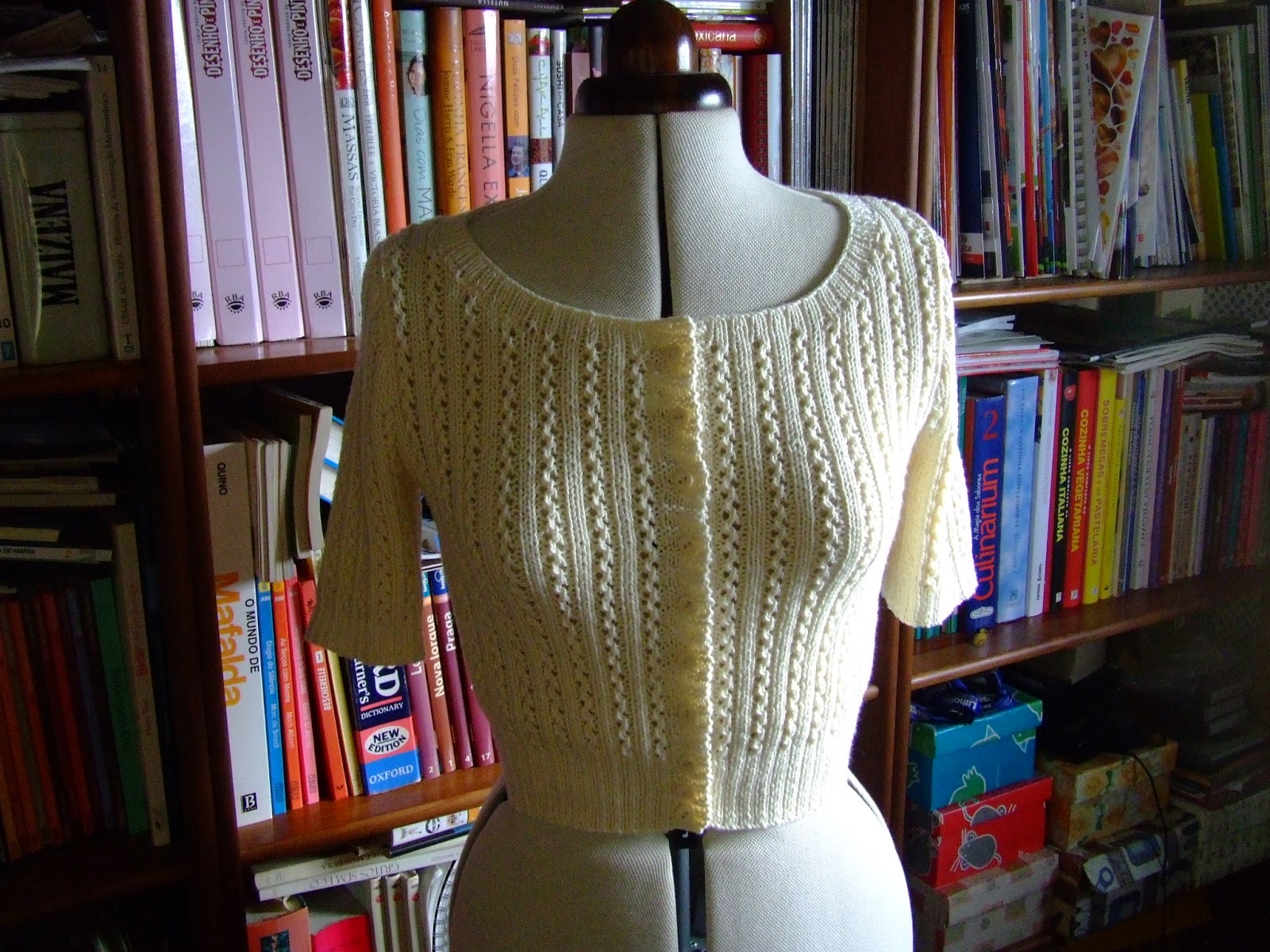
O último projecto de Verão terminado. Começado estas férias no Algarve, veio a ser concluído na semana passada. Demorei a encontrar botões e como entretanto o Outono chegou em força, deixei de ter pressa em terminá-lo porque já não o iria vestir este ano, apesar disso, estava curiosa e com muita vontade de o ver pronto.
O modelo é mais um da Kim Hargreaves e resultou tão bem que fiquei com vontade de repetir com outras cores, pois faz um casaquinho para dias mais quentes muito bonito e versátil.
O modelo original tem as mangas mais curtas. Eu preferi fazê-las um pouco mais compridas pois queria que me aconchegasse mais (que é o que pretendo quando visto um casaco), mas ainda assim curtas para manter o encanto deste modelo.

Modelo: Anaïs (colecção Misty da Kim Hargreaves)
Fio: Schanchenmayr Cotton Eco (50g/130m) - 260g (cor 02)
Agulhas: 3mm (canelado) e 3,5mm


Last Summer project finished.
Begun in last holidays in Algarve, it was finished last week. I took some time to find the right buttons and as  Autumn arrived meanwhile, I had no hurry in finishing it once I wouldn't wear it this year. Despite that, I was really curious and willing to see it finally done.   
Pattern is one more from Kim Hargreaves and it turned out so well that I would like to knit it again in other colours. It makes a very beautiful summer cardigan.
The original pattern has shorter sleeves. I preferred make the sleeves a little bit longer to get cozier (what I intend when I put on a cardigan), but even so short to keep the charm of this lovely cardigan.

Pattern: Anaïs (Misty collection from Kim Hargreaves)
Yarn: Schanchenmayr Cotton Eco (50g/130m) - 260g (colour 02) 
Needles: 3mm (rib) and 3,5mm

Etiquetas:

domingo, março 18, 2012

Trench coat

E foi este o primeiro a ser terminado (ver post anterior)!
Estou muito contente com o resultado. Apesar de ser um projecto grande e com bastantes detalhes, foi muito fácil e mais rápido de tricotar do que outros projectos mais pequenos e não tão exigentes. Ou talvez tenha sido apenas uma questão de motivação...


Receita/Pattern: Ford by Kim Hargreaves
Fio/Yarn: Red Heart Helsinki (100% acrílico/acrylic) 200g/340m: 1060g em cinzento/in gray
Agulhas/Needles: 5 mm e 4 mm


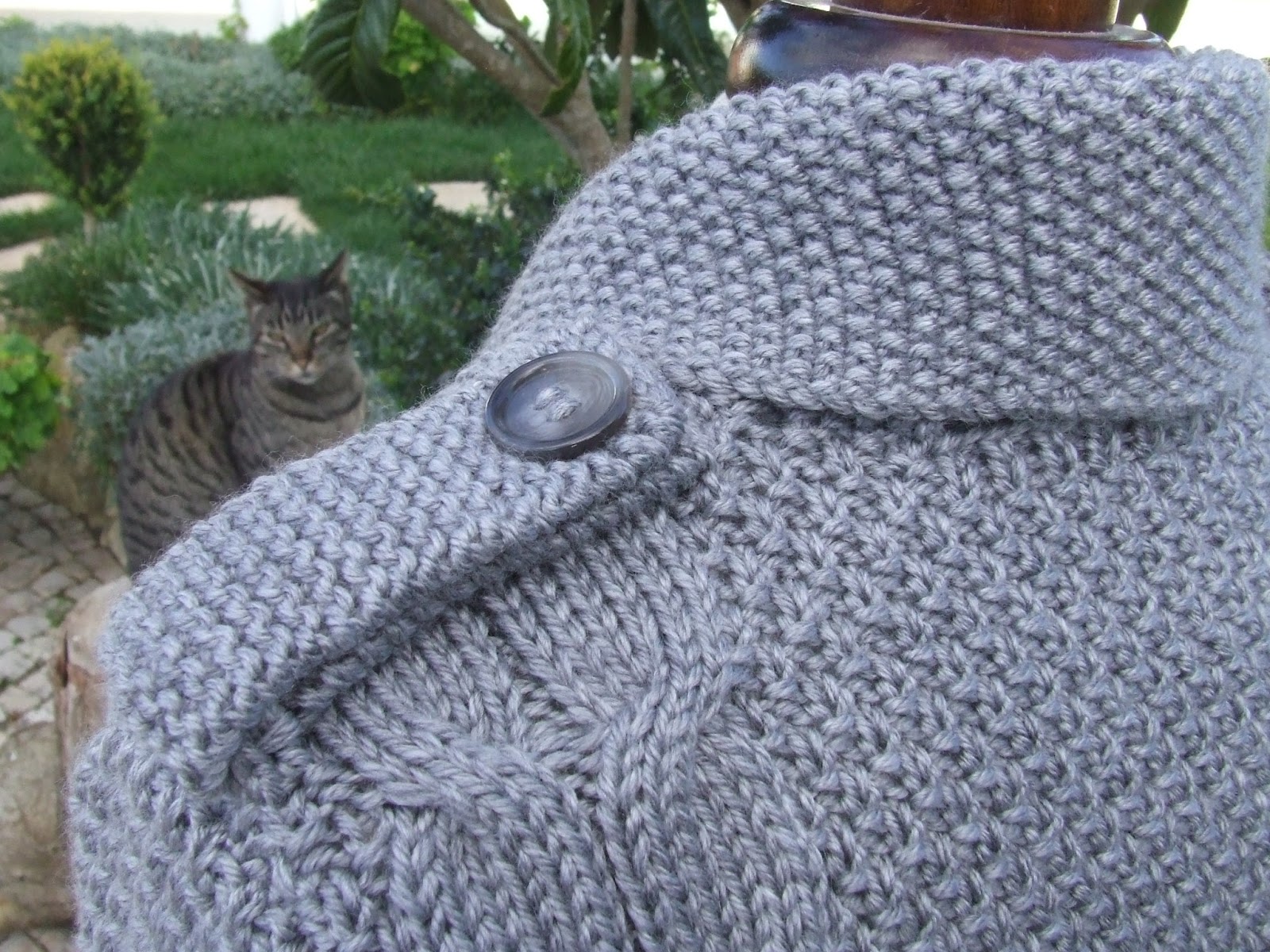
Segui a receita à risca excepto no ponto base: não gostei do ponto original (atenção que o ponto original no livro está errado: ver errata no Ravelry) e decidi escolher um "meio" ponto de arroz duplo (Carr. 1 e 2: m.meia, m.liga, até ao fim; Carr. 3 e 4: m.liga, m.meia, até ao fim). Este ponto, como é uma repetição sucessiva de 2 carreiras iguais, tornou-se muito útil quando tinha de fazer contagem de carreiras, algo que neste modelo acontece com frequência.


A lã é acrílica e resultou muito bem. O meu orçamento não me permitia investir tanto em lã de qualidade superior por isso quando vi este fio pensei logo que seria uma boa opção - e em conta - para este projecto. Apesar de ser acrílico, o fio tem uma textura Aran interessante que lhe dá mais o aspecto de lã do que os acrílicos correntes. Agora estou disposta a tricotar este casaco outra vez, no futuro, com outra lã: este modelo merece o investimento e não será problema ficar com dois casacos semelhantes!

I’m really happy with the outcome. It turned out perfect and contrary to what I expected it was a fast knit, easier and faster than other smaller and apparently not so demanding patterns.
I changed the stitch pattern (note: original st pattern in the book is wrong: see erratum in Ravelry) because I tried and didn’t like the outcome so I chose another st pattern instead, a “half” double moss st (Rows 1 and 2: knit, purl to end; Rows 3 and 4: purl, knit to end).
It turned out very simple and quite helpful to count rows, which is often required for some crucial steps. For the rest I followed the pattern exactly.
I hadn’t budget for such an amount of first quality yarn so when I saw this acrylic yarn (despite being acrylic it is an Aran/10 ply yarn with an interesting texture) I thought it would be a great option for this coat and I was right. Nevertheless, I hope in the future knit again this coat with a better yarn because  this pattern worth it and I won’t mind having two similar coats! 

Etiquetas:

sábado, julho 31, 2010

Dawn


Receita: Dawn da Kim Hargreaves
Fio: King Cole Bamboo Cotton (100g/230m) 50% bambu 50% algodão - 260g
Agulhas: 3,5 mm (canelado cintura) e 4 mm

Pattern: Dawn by Kim Hargreaves
Yarn: King Cole Bamboo Cotton (100g/230m) 50% bamboo 50% cotton - 260g
Needles: 3,5 mm (waist rib) and 4 mm


Um modelo muito fácil de tricotar. O facto de ser tricotado numa só peça facilita imenso na hora de coser ;) Também gostei muito de trabalhar com este fio que, sendo uma mistura de bambu e algodão, é mais macio do que os de algodão apenas.

A very easy knitting pattern. The fact of being knitted in just one piece makes sewing so much easier ;) I also enjoyed working with this yarn, which being a mixture of bamboo and cotton, is softer than cotton only.

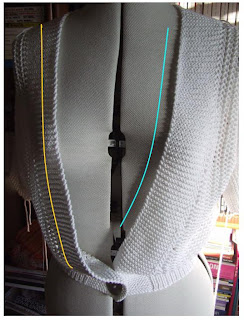
O único percalço que tive foi já no final, depois de já ter costurado o decote. Como tricotei o cós com agulhas 3,5 mm e o resto da peça com agulhas 4 mm por causa do ponto ajurado, isto fez com que a barra do decote/frentes não ficasse tão apertada e elástica como eu pretendia. Note-se que o “canelado” dessa barra é feito com ponto musgo (que se consegue tricotando todas as voltas em ponto de meia ou em ponto de liga) e ao usar agulhas 4 mm o ponto ficou menos elástico. Isto reflectiu-se no final, com as frentes a ficarem muito “pingonas”. Ainda perdi algum tempo a pensar como ia resolver isto até que me lembrei de usar fio elástico, introduzindo-o ao longo da ourela do decote.

I knitted the waist rib with 3,5 mm needles and the rest with 4 mm needles and because of this the border of the neckline/fronts didn’t turn out so tight and elastic as I wanted to. As a result, the fronts turned out too loose in the end. To correct this I decided to use elastic thread by introducing it along the border of the neckline.

O efeito foi imediato, ajustando a tensão do elástico corrigi imediatamente a folga e obtive uma ourela mais apertada. Podem ver na foto seguinte a diferença entre a frente direita “pingona” (linha amarela) e a frente esquerda já ajustada com elástico (linha azul).

Immediately I got a tighter neckline, better adjusted, by adjusting the elastic tension. You can see the difference, in the photo below, between the right front, loose (yellow line) and the left one, already adjusted with the elastic (blue line).

Os botões grandes também são de madrepérola, que eu muito aprecio, como no modelo original.
The buttons are of nacre, which I love, as in the original pattern.

Etiquetas:

terça-feira, junho 15, 2010

Casaco Ayala / Ayala cardigan


Receita: Burda Tricot nº 2 Printemps 2008 #Modelo 19
Fio: Gedifra Ayala 50g/90m (51% viscose 27% poliamida 22% linho) #preto 2214 – 10 novelos
Agulhas: 4 mm (croché nº3,5)

Pattern: Burda Tricot Printemps 2008 #Patt. 19
Yarn: Gedifra Ayala 50g/90m (51% rayon 27% nylon 22% linen) #black 2214 – 10 skeins
Needles: 4 mm (crochet nr. 3,5)

Este projecto começou porque eu precisava de um casaco de Verão de malha preto. Optei por fazer este modelo em preto, porque gostei do ponto e achei o fio interessante. E tive a sorte de o fio indicado pela receita estar à venda aqui. É que eu pretendia um casaco de malha mais sofisticado e não queria usar algodão. O fio tem uma mistura de viscose e poliamida, que lhe dão um cair fluido e pesado, e um certo brilho, e linho, que lhe confere uma certa consistência.
This project started because I needed a black summer cardigan. I chose to knit this pattern in black instead and I had the luck of finding the original yarn here. I wanted a knitted cardigan more sophisticated and I didn’t want to use cotton. This yarn is a blend of viscose and polyamide which gives some fluidity and weight to the fabric, and linen, which gives it a certain consistency.

Segui a receita, que é bastante simples. Fiz uma alteração no comprimento das mangas, que reduzi ao tricotar menos uma barra de ponto de meia do que o indicado. Ainda assim ficaram compridas, e se não o tivesse feito, o fio não me tinha chegado.
Após a costura da peça é feito um acabamento em croché a toda a volta da peça e das mangas, e que serve também para fazer as casas para os botões. Aqui também fiz uma alteração à receita, por causa da quantidade de fio que me restava: em vez de fazer uma 1ª volta em ponto baixo antes da volta do picô, fiz apenas a volta de picô e suprimi a volta de ponto baixo. Poupei fio, o que foi fundamental para que ele chegasse, e não afectou em nada o acabamento. Este acabamento em croché é essencial para uniformizar as frentes, já que uma tende a ser mais “pingona” do que a outra.
The pattern is quite simple. I made an alteration to the sleeves length, which I reduced by knitting one less strip of jersey on each one. Nevertheless, they remained long enough and otherwise the yarn amount hadn’t be enough. After sewing, the finishing is made by crocheting around the edging, including sleeves, which also serves to make the buttonholes. I made another alteration because of the little amount of yarn that remained: instead of making one row of simple crochet before the row of picot I just made this last one. It was no problem. This crochet finishing is essential to equalize the fronts because one tends to get looser than the other.
Um aspecto interessante deste ponto é que as carreiras de ponto ajurado que dividem o ponto de meia em barras facilitam muito a tarefa de unir as várias partes pois funcionam como linhas-guia. Foi muito mais fácil fazer as costuras laterais e das mangas sabendo que as linhas de ponto ajurado tinham de bater certo umas com as outras. O mesmo acontece quando se usam riscas, por exemplo.
An interesting aspect of this pattern is that those rows of lace stitch between stockinet stitch are quite useful when we are joining and sewing the pieces, because they work as guidelines. It gets so much easier making the lateral and sleeves seams knowing that those rows must match. The same that happens with stripes.
O preto é uma cor muito ingrata de se fotografar, mas ainda assim espero que consigam perceber o brilho do fio. Gostei muito do resultado final. E agora já tenho um casaco de Verão de malha elegante. Só é preciso é que o calor chegue finalmente, o que está difícil!
Black is a hard color to photograph, but I still hope that you can notice the glow of the yarn. I really liked of the final result. And now I already have an elegant summer cardigan to use, although summer is almost there and nice weather hasn’t been arrived yet!

Etiquetas:

domingo, abril 18, 2010

Casaco Terra / Cardigan "Terre"

Bem, já se passou algum tempo desde que actualizo o blogue!
A Emily ainda não está pronta, mas está quase (para a falta de tempo contribuiu uma rotura no gémeo da perna esquerda que sofri há um mês e que me fez gastar muitas horas das últimas semanas em fisioterapia... felizmente já está resolvido!).

Hoje venho mostrar um projecto em jeito de início da época Primavera/Verão: este casaco - iniciado aqui - está terminado desde o final do ano passado, mas como entretanto meteu-se o Outono e o Inverno, acabei por guardá-lo (a ele e ao post) para mostrá-lo agora, com os primeiros anúncios de sol (entretanto recomeçou a chuva, mas pronto...)

Well, it has been a while since I posted something! Emily isn’t finished yet but it’s almost done (I haven’t had much time on last weeks because I suffered a tear in a muscle of the leg one month ago and spent a lot of hours on physiotherapy… fortunately everything is ok now!).
Today I want to show you a cardigan (started
here) which is finished since last summer end, but as meanwhile came the autumn and the winter, I kept it closed until the spring come again.
Modelo: Cardigan ajouré (modelo nº 31) da revista Fait Main hors série Tricot Printemps 2009
Fio: Schachnenmayr Cotton Eco Color - cor 0010 – 9 novelos
Agulhas: 3,5 mm

Pattern: Fait Main hors série Tricot Printemps 2009 magazine (patt. #31)
Yarn: Schachenmayr Cotton Eco Color (color 0010) - 9 skeins
Needles: 3,5 mm
O fio é um algodão tingido de forma ecológica, muito agradável de se trabalhar com agulhas de bambu. Além do fio, adorei o ponto. Quando vi o modelo na revista, decidi logo que queria fazê-lo, se arranjasse o fio na mesma cor, que encomendei aqui. O fio tem uma cor mesclada interessante (atenção, este fio Cotton Eco existe também na cor 0010 sem ser mesclado, o mesclado é Eco Color) com zonas mais escuras, o que se deve ter em conta de modo a que essas irregularidades na cor fiquem distribuídas o mais simetricamente possível (pelo menos foi o que eu tentei).

It’s an ecological yarn, very pleasant to knit with bamboo needles. I loved the yarn as much as the pattern. When I saw it at the magazine I thought I had to knit it as long as I could get the same pattern’s color yarn. You can notice the color isn’t uniform with darker zones (note that there is also Schachenmayr Eco color 0010 but is a solid color since isn’t Eco Color), so we must pay attention when we knit in order to distribute those darker areas evenly.

O ponto ajurado em diagonal é muito simples bem como o ponto das flores, basta seguir o gráfico. Hei-de explicar um dia destes como se fazem os “noppes”ou “nós” das flores.

Both lace stitch and the flowers are quite easy to knit, you just have to follow the graphic. I would show you how to make the flowers’ "noppes".
Não fiz alteração nenhuma ao modelo, que é muito simples de tricotar. Acabei por perder mais tempo nos acabamentos, a decidir se ia fechá-lo ou não e como o iria fazer. Se repararem, no original, o casaco fecha apenas com um botão em cima. Gostei bastante deste pormenor que, para mim, lhe dava parte do seu encanto. Mas na prática isto não é muito funcional, até porque as abas têm tendência para começar a revirar… Mas como fechá-lo? Queria manter a frente com um ar clean, logo não queria usar botões, até porque não foi fácil arranjar uma cor de botão que combinasse com este fio. Até que me lembrei de usar colchetes! Resultaram muito bem e são versáteis pois permitem-me usá-lo aberto, como no original, ou fechado.

I didn’t make any alteration but it took me some time trying to decide how I could close the cardigan without loose the clean look of the front. The original closes with just one button at the necklace, which I liked, but this may not be very practical. Then I remembered to use hooks. I think it turned out great and quite versatile because they allow me to wear it open or closed.

Etiquetas:

domingo, junho 28, 2009

Casaco ajurado de Verão/ Summer lace cardigan

Apercebi-me de que o mês de Maio se passou e eu não postei nada e o mês de Junho quase que ia pelo mesmo caminho! É que entretanto comecei o curso de que tinha falado, em horário pós-laboral, e tenho tido menos tempo para fazer as minhas coisinhas. Isso não quer dizer, no entanto, que não tenha feito nada. Devagar, mas as coisas vão andando, pelo menos ao fim-de-semana.
A camisola pied-de-poule vai avançando lentamente, a frente está praticamente terminada, só falta fazer as costas e as mangas, que serão em ponto de meia numa só cor (preto) e, assim, mais rápidas mas também mais monótonas. Por isso, para alternar com a monotonia do preto… antecipei o início do próximo projecto.

I noticed that I don’t update my blog since last April! Because meanwhile I started a course after work I hadn’t so much time to knit and other stuff. But I’ve managed to knit a little at weekends.
My pied-de-poule sweater is going slowly. The front is almost finished, back and sleeves will be in stockinette stitch in just one colour (black), which will be faster but also a little more tedious. To break black's monotony… I started already my next project.


É um casaco, modelo da revista Fait Main hors série Tricot nº11 (Printemps 2009) cujo fio encomendei Na Ponta d’Agulha (não havia, mas foi pedido e rapidamente enviado, obrigada Isabel!), e é o Schachenmayr Cotton Eco Color, um algodão ecológico muito agradável (encomendei mais fios, que hei-de ir mostrando à medida que for fazendo). Comecei no outro fim-de-semana, aproveitando o bom tempo. Este fim-de-semana o tempo está chuvoso e também convida a tricotar mas eu tenho de fazer um trabalho para o curso! Resta-me esperar por mais dias como este:

It’s a cardigan from Fait Main Hors série Tricot nº 11 magazine (Spring 2009 issue). Yarn is Schachenmayr Cotton Eco Color. I started knitting last weekend, enjoying the sunny summer weather. This weekend weather is rainy but I can't knit even because I must finish a work! Well, waiting for more days like this:

Etiquetas:

quinta-feira, setembro 11, 2008

Bolero Debbie Bliss / Shrug Debbie Bliss


Este fio, numa cor que eu adorei, foi comprado o Verão passado para fazer um top que tricotei praticamente todo mas não cheguei a terminar porque não estava a gostar do resultado final. Como aquele projecto não atava nem desatava e eu entretanto comecei a imaginar o fio neste projecto... acabei por desmanchar o projecto velho, que serviu para fazer as mangas do novo. E assim matei dois coelhos duma cajadada, livrei-me de um projecto empancado e fiz um novo!

This yarn, in a colour that I simply loved, was bought last summer to knit a work that I never finished because I didn’t like of how it turned out. It reached to an impasse and, meanwhile, I started seeing the yarn in this pattern… so I undid the old project which yarn I used for knitting the sleeves of this shrug. And so I killed two birds with a stone, I get rid of a stuck project and I knitted a new one!


O modelo é da Debbie Bliss e era a capa da colecção Cathay e sinto um carinho especial por ele porque foi dos primeiros modelos que me lembro de ver quando comecei a descobrir o fascinante mundo do tricô na Internet (estava em 2005...) Lembro-me daquela sensação “Ah, isto podia ter saído de uma loja e eu consigo fazer!”
E fiz... para isso ajudou encontrar a receita disponível aqui ;)
Usei cerca de 6 novelos de fio Âncora Criativa 100% algodão 50g/125m (na cor 143) e agulhas 3,5 mm (3 mm para o canelado).

Pattern was featured on Debbie Bliss’ Cathay collection and it has a special meaning to me because it was one of the first models I remember seeing when I started discovering the fascinating world of knitting on Internet (it was 2005...). I remember of the feeling “Oh, this could be in a store and I can do it!”
And I did it… it was useful finding the free pattern available
here ;)
I used a Portuguese yarn 100% cotton 50g/125m and 3,5mm needles (3mm for the rib).


Um conselho para quando reutilizarem um fio que já foi tricotado... Ele vai ter mais ou menos este aspecto:
An advice when you're using a yarn that was already knitted... It’ll look like this:

Se usarem o fio assim (mesmo que o enrolem num novelo) vão obter um trabalho com malhas irregulares, uma vez que o fio está deformado (no ponto de meia liso isso nota-se muito bem). À medida que desmancham, façam uma meada com o fio (como na foto) e em seguida mergulhem em água até ficar completamente ensopado. Depois espremam ligeiramente, sem torcer, e pendurem até secar por completo (o peso da água ajuda a esticar o fio). É o que basta para obter um fio liso de novo e para o novo trabalho apresentar malhas regulares e um aspecto uniforme.
P.S. - Obrigada por todas as mensagens de parabéns!

If you use the yarn like this (even if you turn it into a ball) you’ll get a knit with irregular stitches, because the yarn is deformed (in stockinette stitch this is quite noticeable). So, as you are frogging the piece, make a hank and then dip it into water until is completely soaked. Then press slightly and hang it up until is completely dry (the weight of the water helps stretching yarn). You’ll get a smooth yarn again and you can use it, you’ll obtain a knit with regular stitches and a uniform appearance.

Etiquetas: